
We are glad to have attended the 5th Iberian Congress of River Restoration, organized by CIREF (Iberian Centre for River Restoration). The city of Soria welcomed over 400 congress attendees, with whom we were able to share the results of our research.
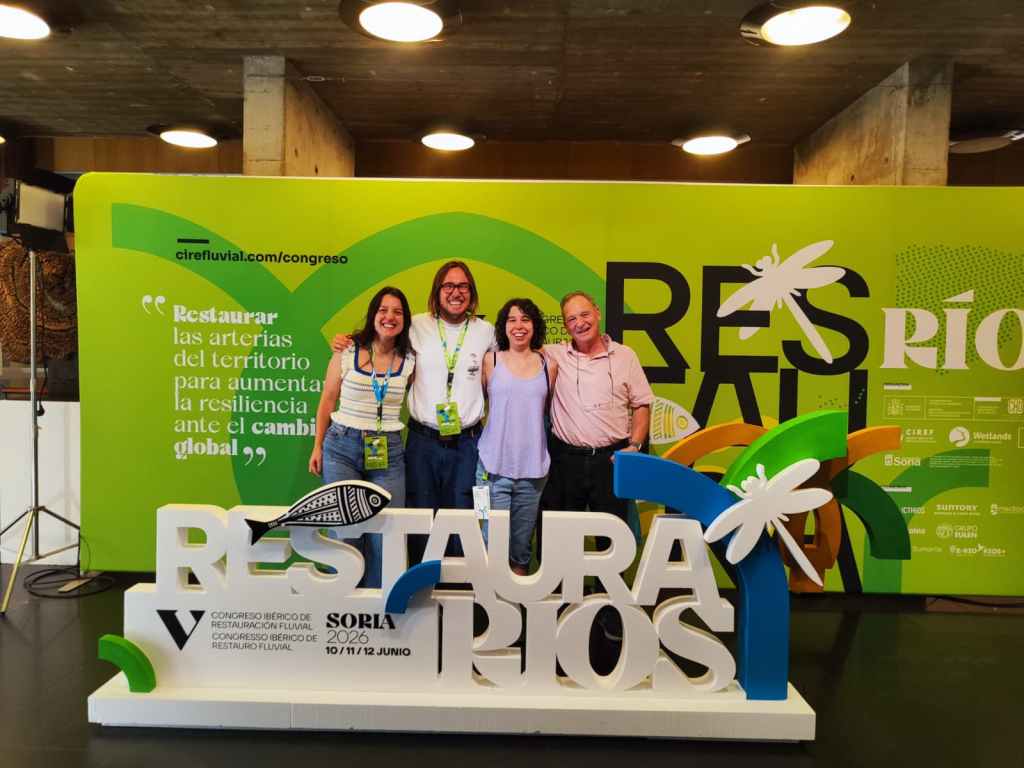
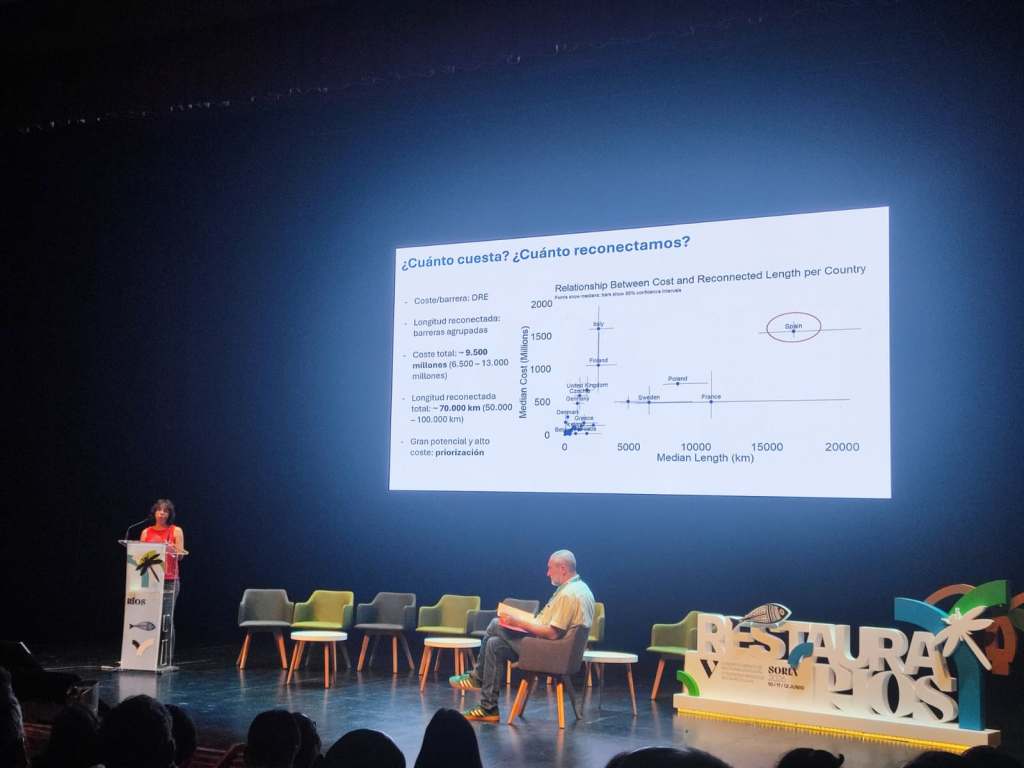
Amaia Angulo Rodeles presented on how many barriers in Europe are obsolete and how much it would cost to remove them, following the guidelines of the Nature Restoration Law regarding the removal of un-used barriers. Given that most barriers are obsolete and resources to remove them are scarce, prioritizing the removal of the barriers that most fragment river ecosystems is key.
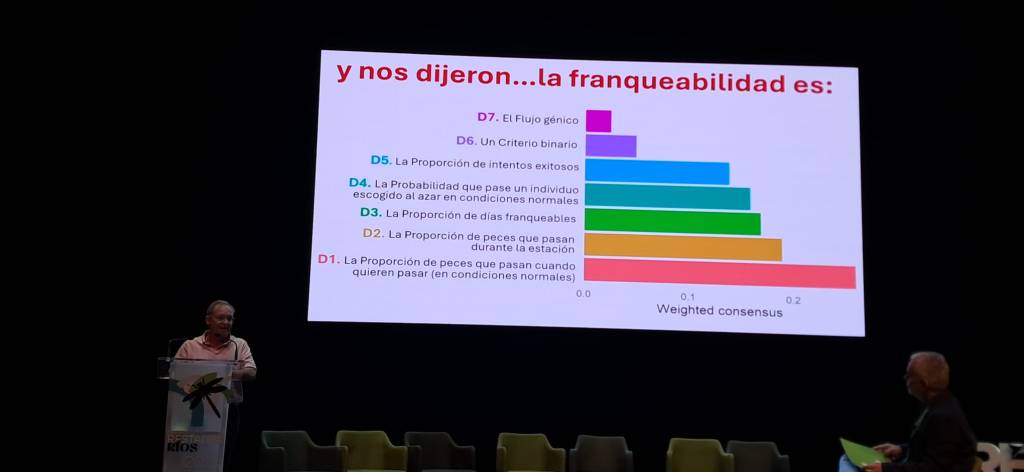
Carlos García de Leániz presented the results of the passability expert workshop that we organized last october. The passability of a barrier is the measurement of its impact on fish dispersal. It is a difficult term to define, as there are also many ways to measure the impact of these barriers. Carlos also showed which barrier characteristics (height, slope, etc.) most influence their impact, according to expert opinion.
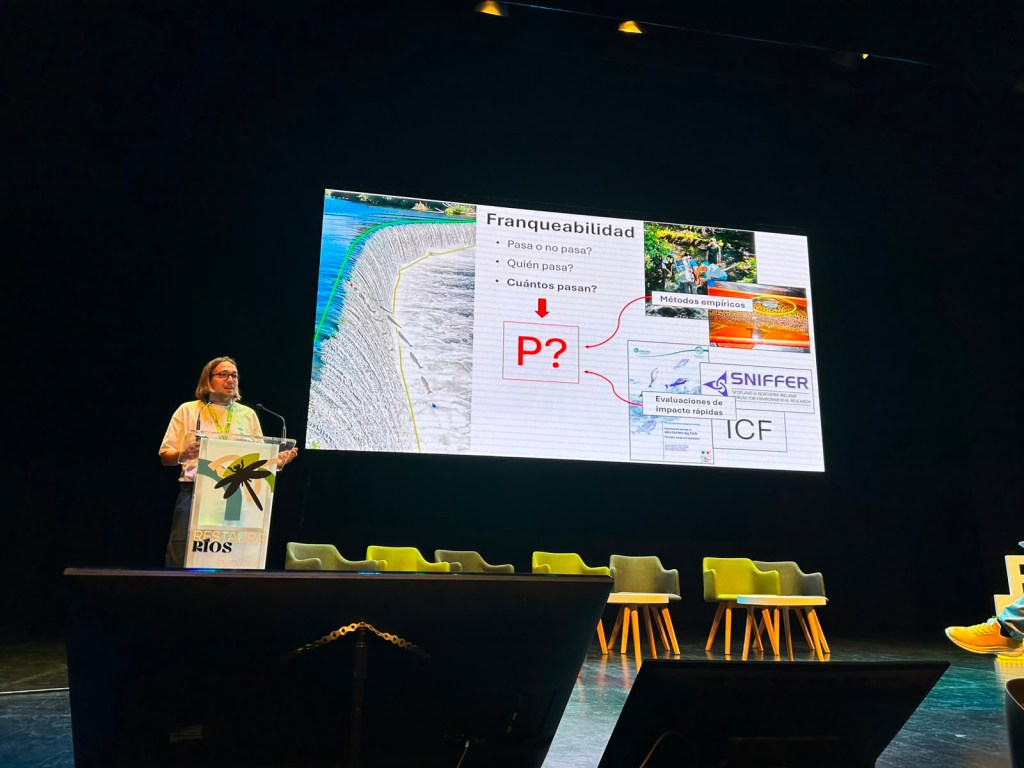
Gabriel Tedone presented how variance is broken down in passability estimates—exploring whether there is a key factor, such as barrier type or species, that explains why some barriers act as greater obstacles than others. He also showed how assumptions about the passability of a set of barriers at the basin level influence large-scale connectivity assessments.
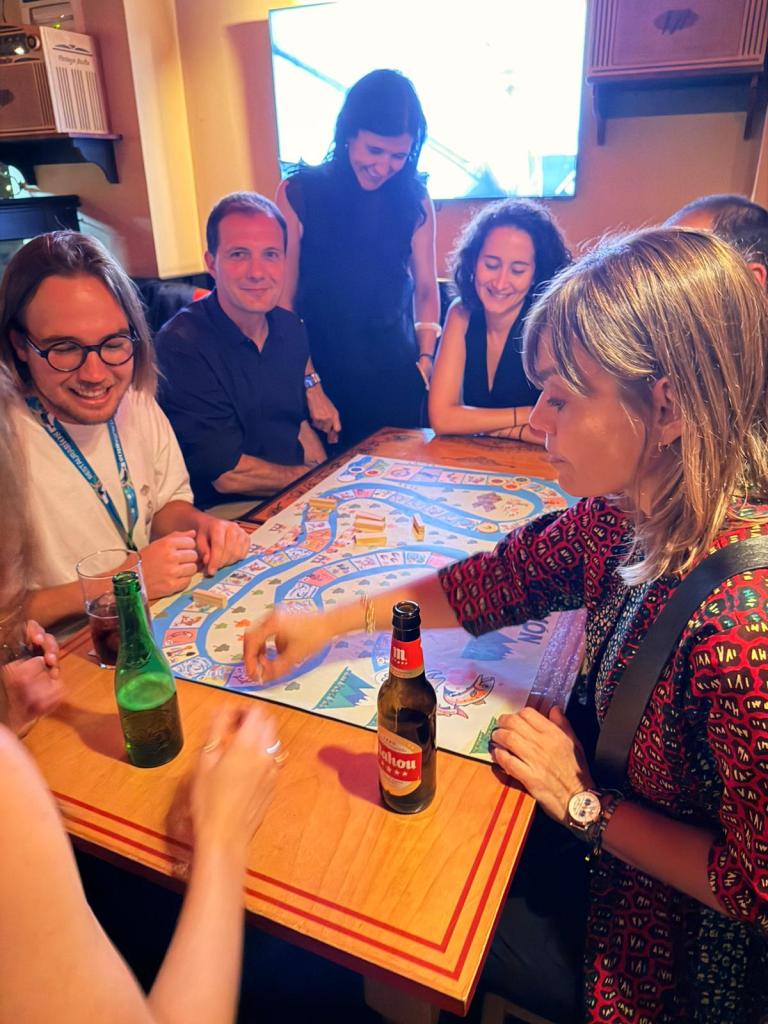
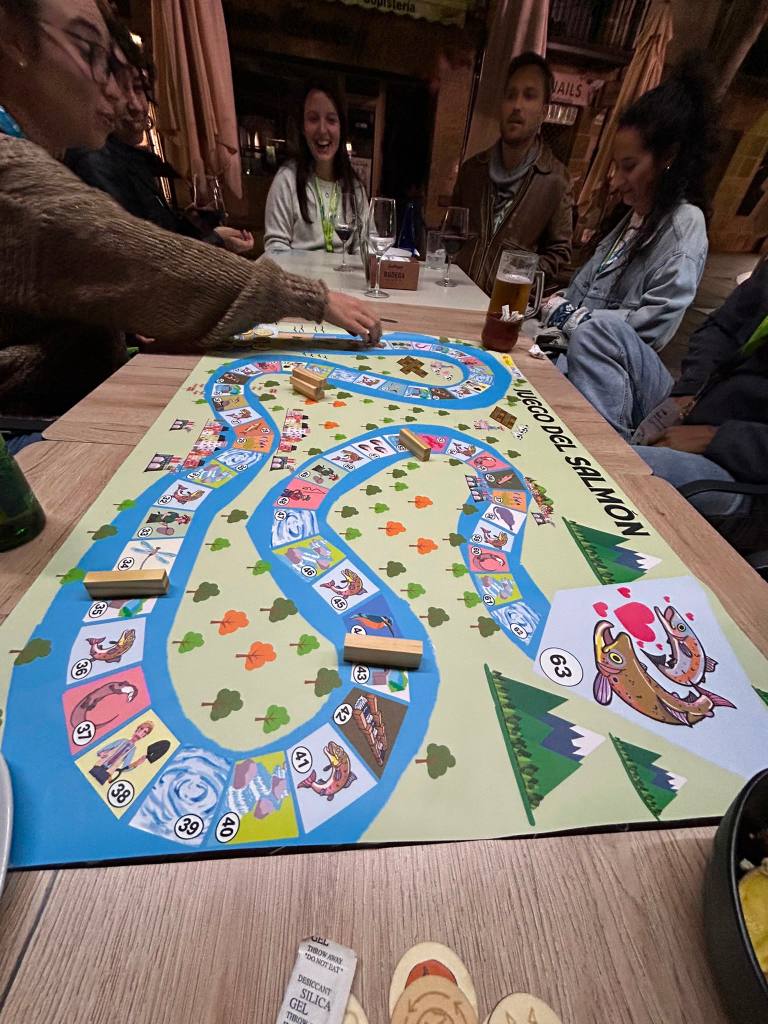
We also had the opportunity to play “el Juego del Salmón“, a game we developed to spread awareness about the importance of river restoration and how difficult it is for salmon to migrate upriver to complete their life cycle amidst barreirs and other threats. It was a lot of fun, and honestly, getting a salmon to the spawning ground is quite a challenge! We invite you to play it—you can download it from our website!
The best part of the conference was being able to strike up conversations with experts and practitioners of river restoration and attend the other presentations, many of which were excellent. It was enriching to debate the challenges of river restoration at the intersection of ecology, society, and governance. It is our job to restore river ecosystems, halt the decline of their biodiversity, and return their natural resilience to combat droughts and floods that are becoming increasingly frequent and intense in this changing climate. A healthy river benefits us all.
See you at the next RestauraRíos! We will be there!
 FreeFlowLab