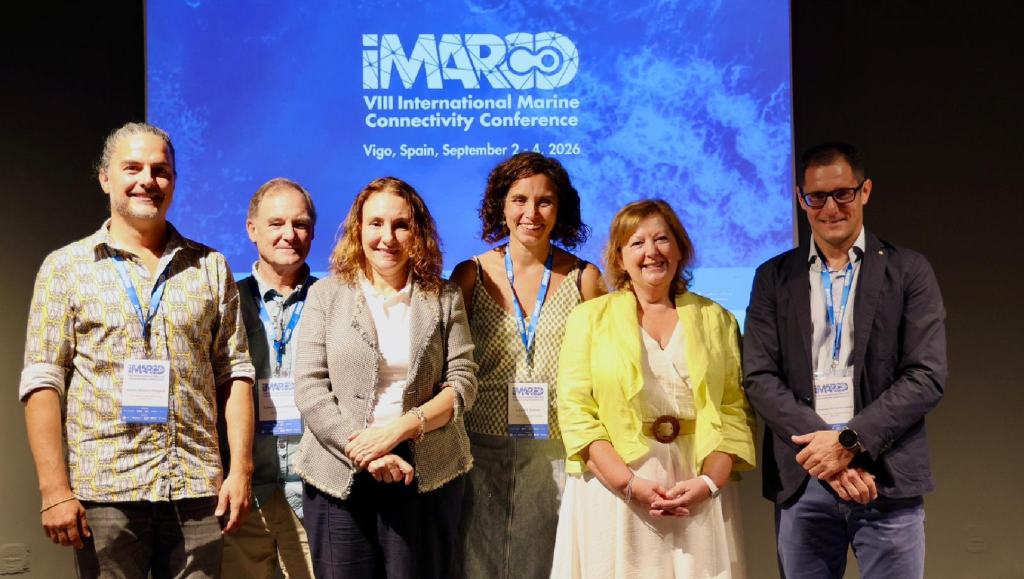
Last week we had the pleasure to attend the IMARCO 2026 conference “Connectivity across water realms for ecosystem resilience” in Vigo.
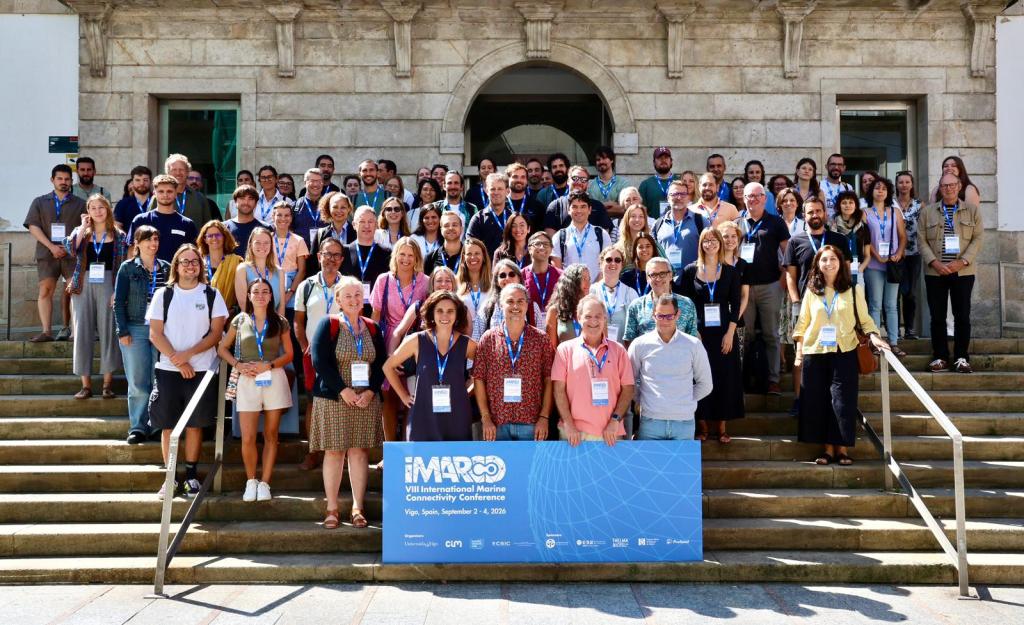
For the fisrt time, this traditionally marine-focused connectivity conference opened up to the freshwater realm to encompass all aquatic connectivity, regardless of how salty water is. From rivers and brackish estuaries to coastal and open ocean ecosystems, the 3-day long conference mixed together researchers from separated fields all studying aquatic connectivity.
Marine connectivity is studied across vast, open, 3-dimensional oceanic water masses and currents, while freshwater connectivity is examined within the confined dendritic river systems. Still, many of the methodologies, baseline concepts, questions and challenges in studying connectivity were similar across research areas.
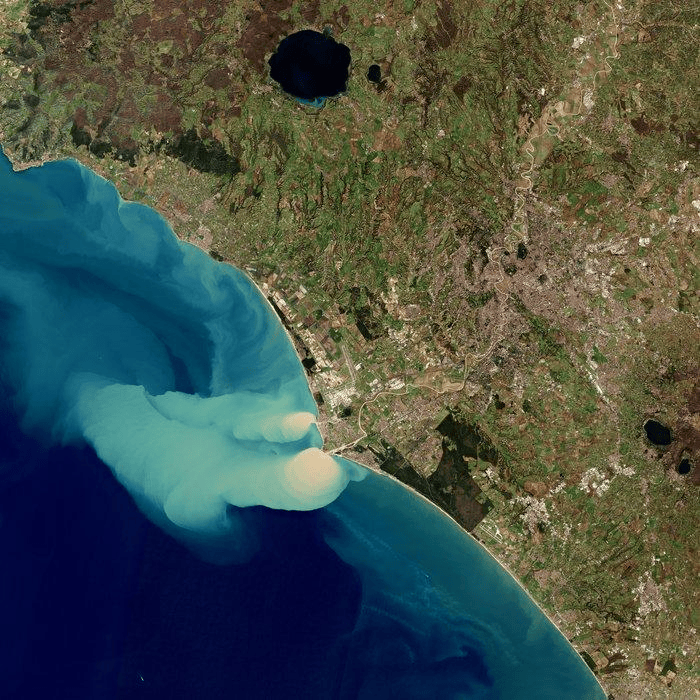
Connecting both freshwater and marine realms, diadromous species remained a central theme throughout the conference. Several researchers highlighted their findings about the connectivity of salmonids across their life stages and migrations in both the upstream and downstream migrations, and how their movement is impaired by barriers and survival impacted by loss of connectivity. At-sea mortality by fishing was also investigated as a major driver of diadromous species population loss.
From our part, Amaia Angulo Rodeles demonstrated that connectivity metrics are highly sensible to how barrier passability is measured (or assumed, under uncertainty).
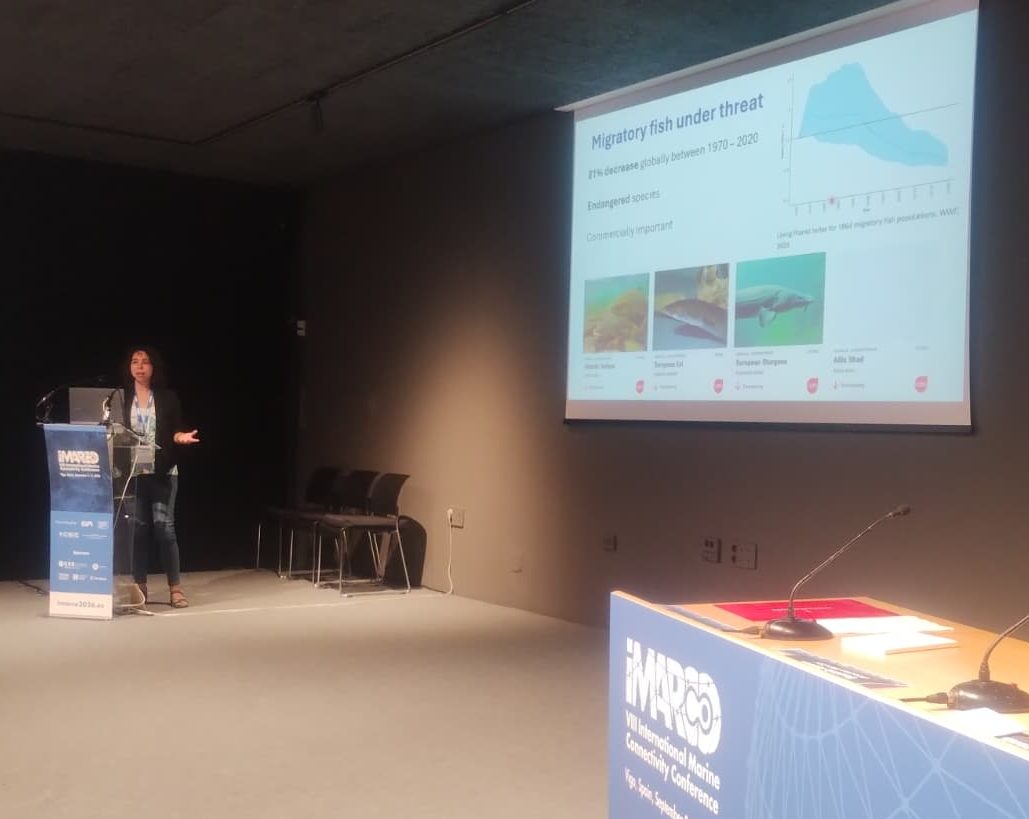
Gabriel Tedone revealed empirical video-recording data that showed how the 2 meter high Ximonde weir (without considering fish ladders) is an impassable barrier to fish in their upstream migration, barely 35 km from the rivermouth.
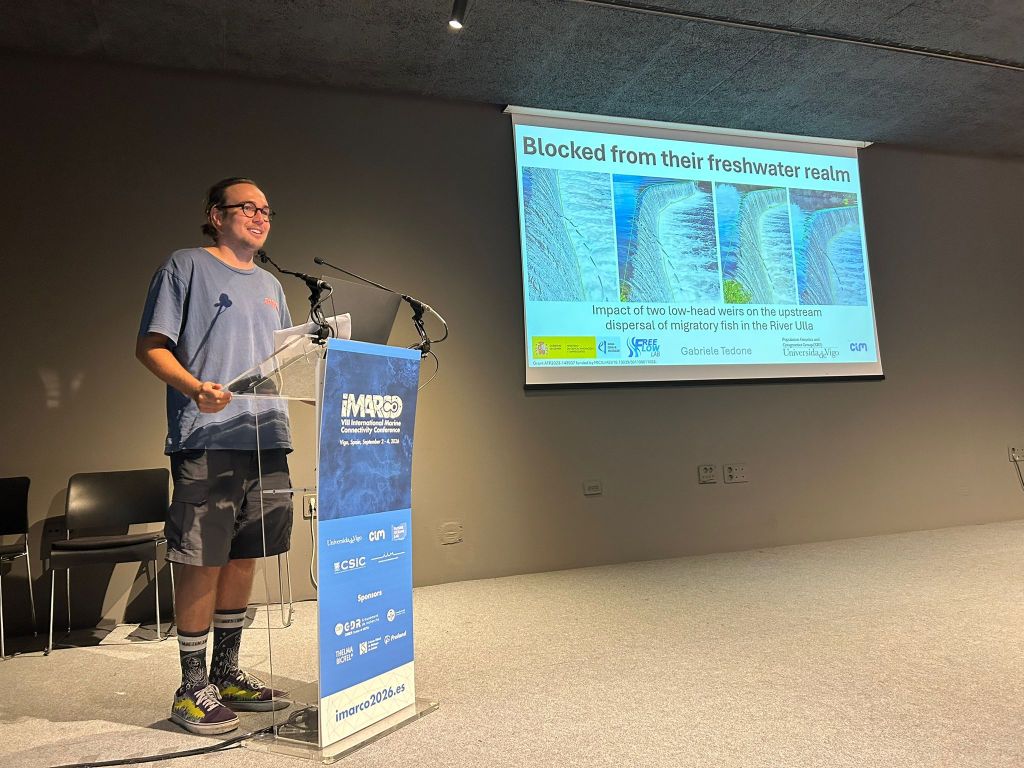
Carlos García de Leániz warned on the effects of climate change and warmer rivers on connectivity, with more extreme climatic events likely increasing the effect of fragmentation by barriers on freshwater fish and the consequent loss of access to climate refugia. He has also helped with the organisation of the conference as the freshwater connectivity expert of the IMARCO 2026 cientific committee.