
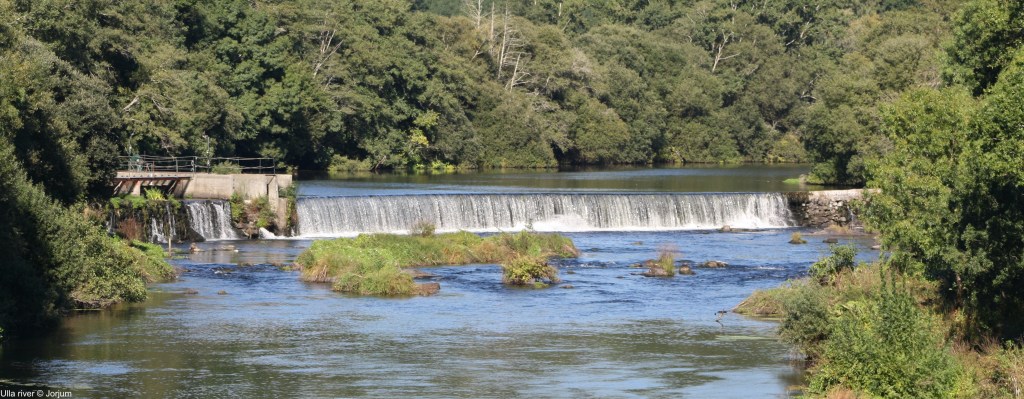
Raúl Díaz Hermida has been analysing video recordings of the Ximonde weir (river Ulla, Galicia, Spain) to analyse the usptream passability of this ~2m weir for freshwater fish.
The Ximonde weir is located in the lower section of the river Ulla, the second biggest river in Galicia, with a dranaige basin of 2764 km². This river hosts a diversity of freshwater fish, including migrating species like the atlantic salmon (Salmo salar), the european eel (Anguilla anguilla), the allis shad (Alosa alosa), the sea lamprey (Petromyzon marinus) and diadromous trouts (Salmo trutta). It also hosts potadromous species such as brown trouts (Salmo trutta) and the migrating Northern straight-mouth nase (Pseudochondrostoma duriense), among others.
The Ximonde weir is an historical infrastructure that was used in the past to deviate water to a water mill. The mill is now obsolete and has been turned into an biological station. Also, this weir now delineates a culturally and historically relevant fishing ground downstream, renowned for its angling of atlantic salmon during their yearly upstream migration around May. However, it has been now been 2 consecutive years that no salmon have been captured.
Raúl has visualised 310 videos, totalling 77 hours of recordings from August 2025 to February 2026. Recodings were taken during 2 hour windows scattered throughout the day (dawn, midday, evening and dusk) with a GoPro camera. From these videos, Raúl identified 374 attempts of fish trying to overcome the obstacle.
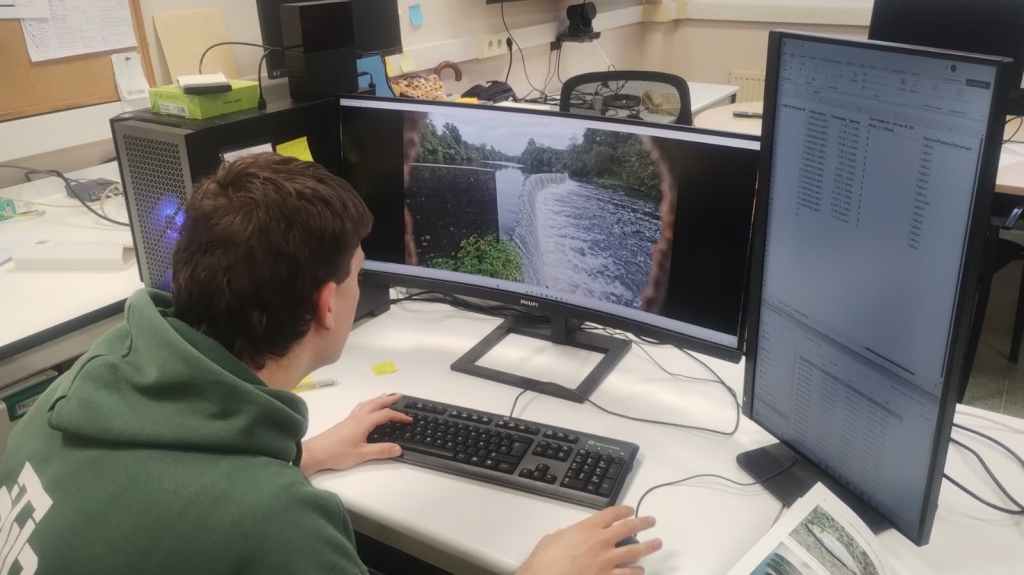
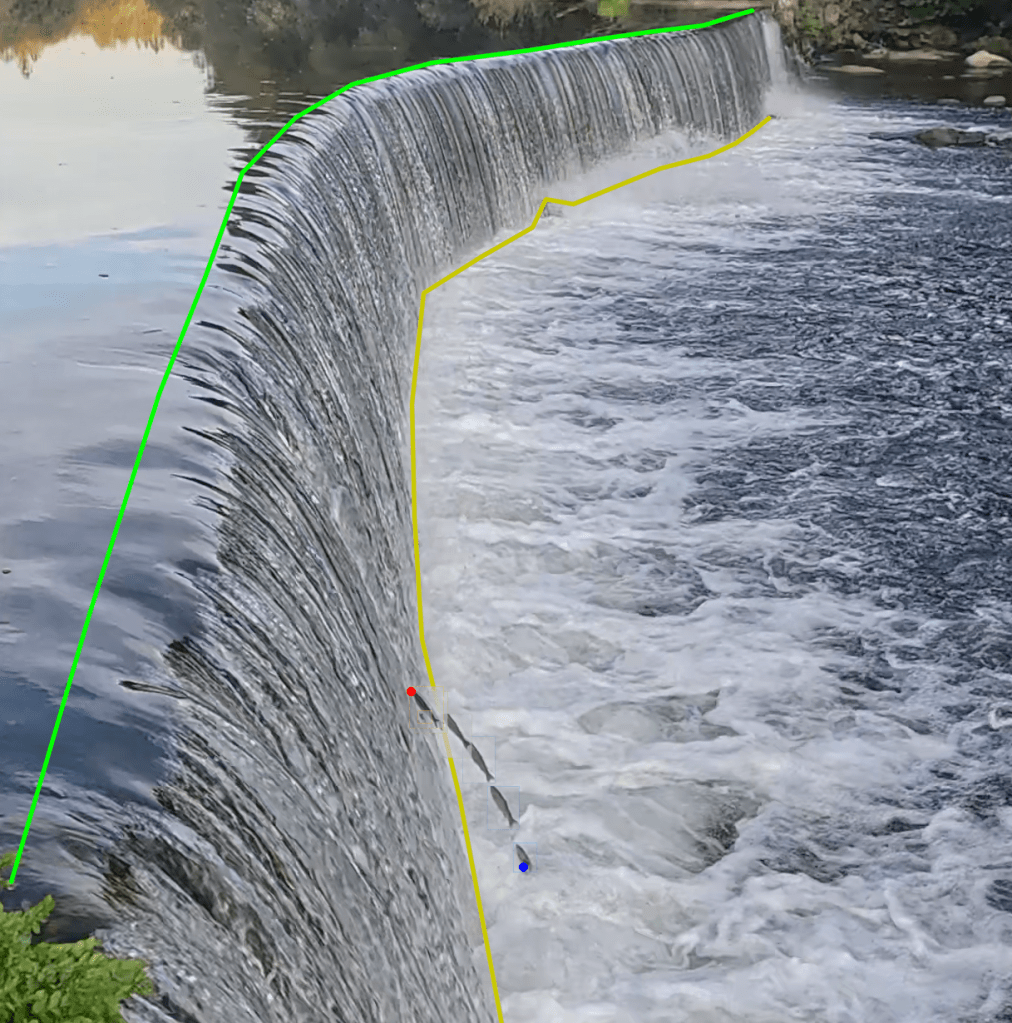
Raúl then proceeded to annotate the leaps in CVAT (Computeer Vision Anotation Tool), identifying the species attempting to pass upstream and their approximate size. He also annotated the leap’s outbreach and impact points and head drop top and bottom water levels. Finally, he drew a bounding box following the leap through each individual frame.
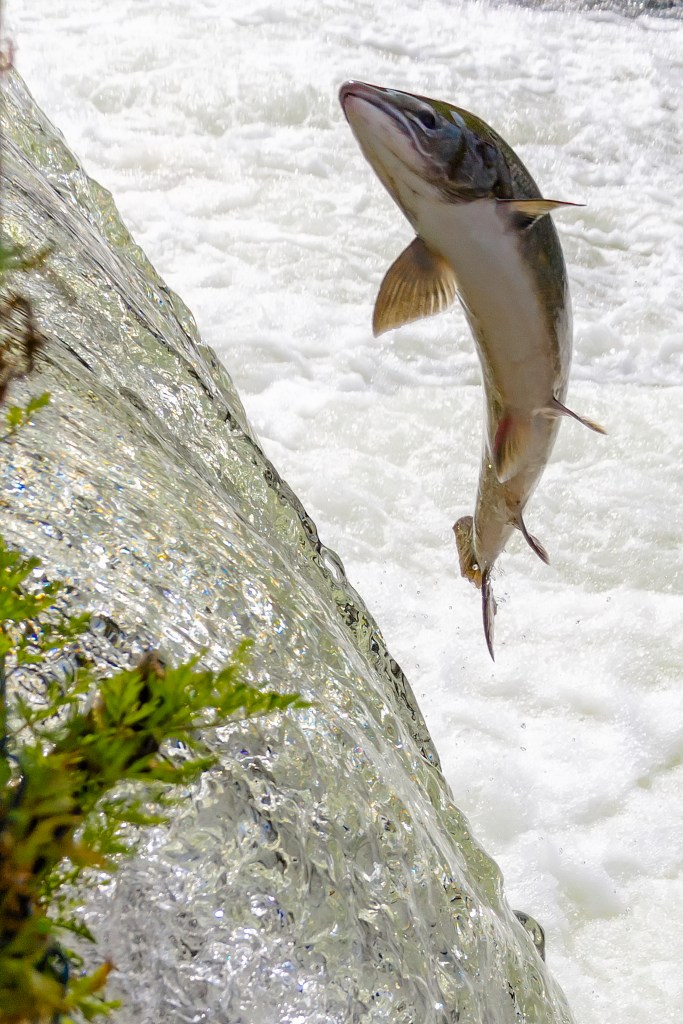
Most recorded attempts (53%, 197 attempts) were of Pseudochondrostoma duriense, concentrated in a single day around mid October 2025. Then followed trouts in potadromous form (26%, 97 attempts), Atlantic salmon (18%, 69 attempts) and anadromous trouts (3%, 11 attempts).
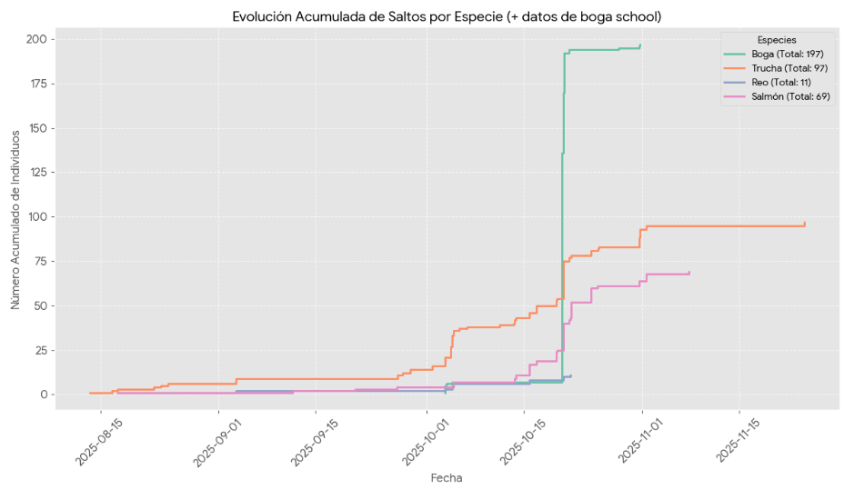
The most crucial finding from Raúl investigation is that of 374 attempts to pass upstream of the Ximonde weir, none succeeded, suggesting that the weir is practically impassable.
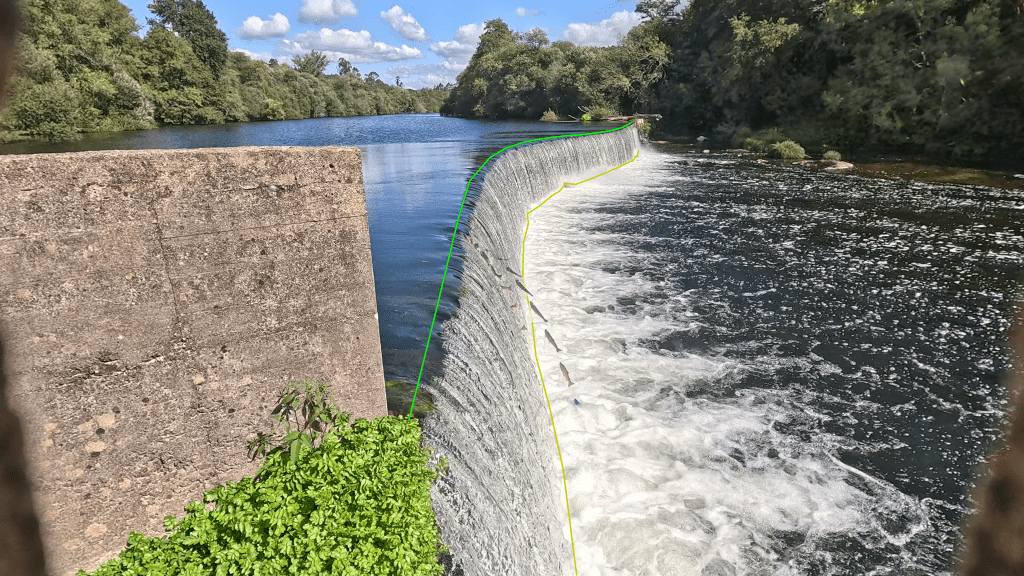
Raúl demonstrated a novel way of estimating the impact of a small barriers on fish dispersal. In this case, the Ximonde weir represents a major obstacle to fish migrations upstream, crucial for many species inhabiting the river Ulla.

