
Removing knowledge barriers for more effective conservation of migratory fish
Posts from the Workshop

Motivation
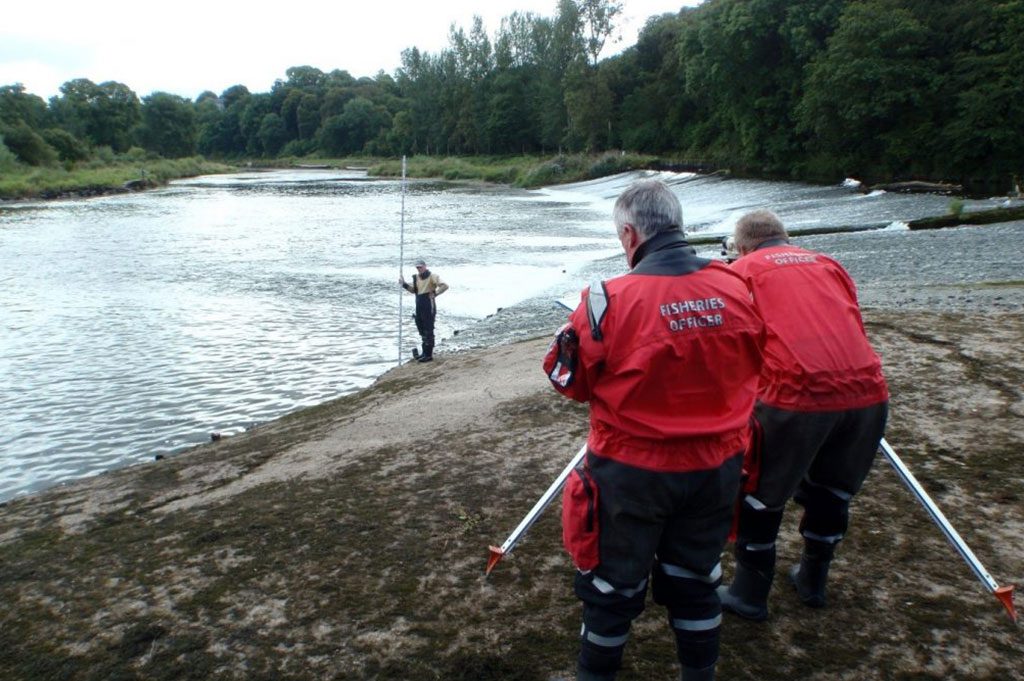
The EU Nature Restoration Law requires Member States to reconnect 25,000 km of free flowing rivers by 2030, but efficient restoration of river connectivity relies on being able to prioritize barriers for removal or mitigation. For this, the estimation of barrier passabilities for fish is paramount, but these are notoriously difficult to obtain, as they vary widely depending on barrier characteristics, environmental conditions and differences between species and individuals. There is an urgent need to develop rapid barrier passability assessments that can benefit from novel AI-driven approaches and help deliver on Free-Flowing River targets.
Objectives
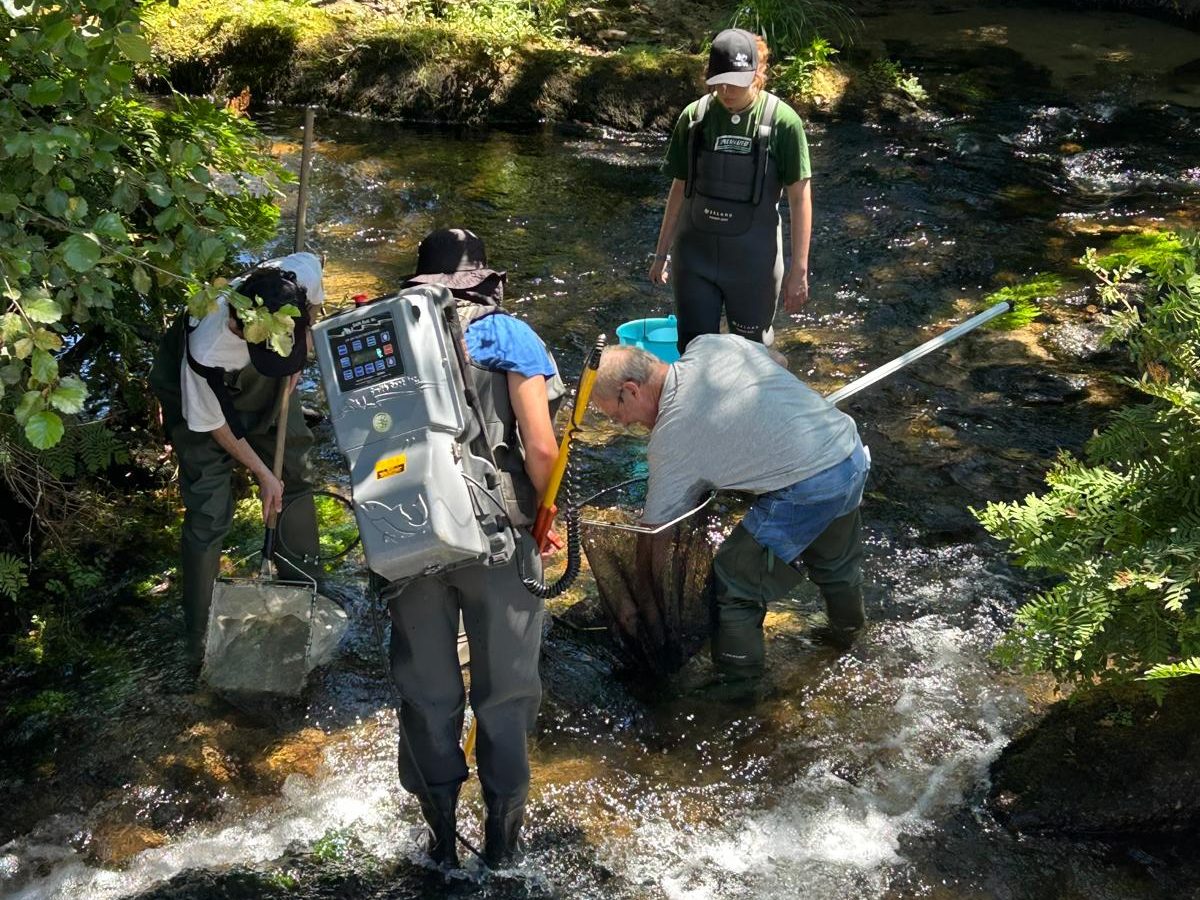
In this workshop we will build fuzzy cognitive maps using expert assessment to identify the main drivers of barrier passability. We will also assess the degree of consensus among experts on what makes a barrier passable or impassable for different fish species, and use barrier photographic records to train a model to estimate passabilities based on machine vision and fuzzy logic.
Participants
The 2-day workshop will take place at the University of Vigo (Redeiras building) and will be attended by 19 experts on migratory fish from the US (Oregon State University), Austria (BOKU), the Netherlands (Deltares), Hungary (BLRI), UK (University of Southampton, University of Kent), Portugal (University of Lisbon) and Spain (University of Vigo, CSIC, University of Valladolid, Xunta de Galicia).

LIST OF EXPERT KNOWLEDGE CONTRIBUTORS
List of fish passability experts
- Tom Buijse (Deltares, Wageningen University)
- María Teresa Fereira (Universidade de Lisboa)
- Virgilio Hermoso (EBD-CSIC)
- Paul Kemp (University of Southampton)
- Guillermo Giannico (Oregon State University)
- Carlos García de Leániz (CIM, CSAR, Universidade de Vigo, Swansea University)
- Ivan Arismendi (Oregon State University)
- Arif Jan (Oregon State University)
- Amaia Angulo Rodeles (CIM, Universidade de Vigo)
- Alba Franco (CIM, Universidade de Vigo)
- Gabriel Tedone (CIM, Universidade de Vigo)
- Sonia Consuegra (CSAR, Swansea University, IIM-CSIC)
- Jesse O’Hanley (University of Kent)
- Francisco Javier Sanz Ronda (Universidad de Valladolid)
- Pablo Caballero Javierre (Xunta de Galicia)
- Erős Tibor (Balaton Limnological Research Institute)
- Paulo José de Lemos Branco (Universidade de Lisboa)
- Florian Borgwardt (BOKU University)
- Paloma Morán Martínez (CIM, Universidade de Vigo)
AGENDA
Throughout the entire workshop, we will be using an interactive R shiny app to collect data on expert’s knowledge, matching each individual’s perceptions to photos of barriers, drivers of passability and concepts & definitions of passability.
Day 1 – TueSday 14/10/25
09:00 – 10:00 – Setting the scene: workshop introduction, expected outputs and round of presentations
10:00 – 11:00 – Definitions of passability
11:00 – 11:30 – Coffee Break
11:30 – 13:00 – Functional relations of drivers of passability
13:00 – 14:00 – Lunch
14:00 – 17:00 – Building Fuzzy Congitive Maps with mental mapping of drivers of passability
17:00 – 20:00 – Free time
20:00 – Dinner – Networking, planning future projects, establishing consensus on passability.
Day 2 – Wednesday 15/10/25
09:00 – 10:00 – Turning congitive maps into Bayesian Belief Networks – Conditional Probability Tables
10:00 – 11:00 – Scoring passability on barrier photos – 1st Session
11:00 – 11:30 – Coffee Break
11:30 – 12:30 – Scoring passability on barrier photos – 2nd Session
12:30 – 13:00 – Building consensus: Repeatability and Calibration of experts’ knowledge
13:00 – 14:00 – Lunch
14:00 – 15:00 – Trout units: barrier passability for non-salmonid fish
15:00 – 16:00 – Revisiting workshop outputs. Setting objectives and assigning future tasks.
16:00 – 17:00 – COST Action. MS outline and tasks. Biodiversa.
18:30 – 20:00 – Free time
20:00 – Dinner – Networking, planning future projects, establishing consensus on passability.
LOCATION
The expert workshop will take place in several rooms of the Redeiras building, a space from the University of Vigo in the historic center of Vigo.

Sponsoring and supporting this event:




 FreeFlowLab